Reading for gist
Instructions
Read the text below. You are going to read about three languages.
While you read the text individually, write down the answers to these questions:
- In what ways are the three languages similar?
- In what ways are they different?
- How do these stories make you feel?
Text
DANGER!
Dying Languages
2015
About half of the world’s languages are in danger of dying out, and many have already been lost, sometimes without any written record to show what they were like. We look at three languages: one dead, one dying, and one which is being brought back to life thanks to one woman’s dream.
Bo
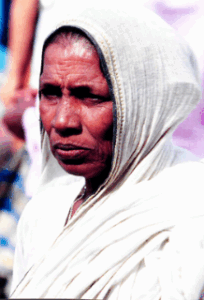
In 2006, the last speaker of Bo, an ancient tribal language, died in the Andaman Islands, off the coast of India, breaking a 65,000-year link to one of the world’s oldest cultures. Boa Sr was the last native who was fluent in Bo, which had been spoken since pre-Neolithic times.
Though the language was being studied and recorded by researchers, Boa Sr spent the last years of her life as the only speaker of the language, so she was unable to converse with anyone in her mother tongue. The Bo songs and stories the old woman told couldn’t be understood even by the members of related tribes.
N|u
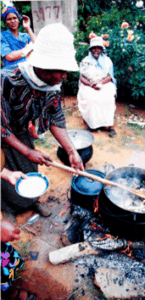
Hannah Cooper is one of the few remaining speakers of a southern African language called N|u (the vertical line represents a clicking sound made with the tongue). N|u is now only spoken by about eight people. Now most young people have no interest in learning N|u, which they see as an ‘ugly language, just for old people’. Although efforts are being made to save the language from dying out by recording stories and by giving language classes for children, it seems unlikely to survive as a spoken language for more than a few years.
Hannah remembers: ‘We all used to get together and speak the language. We gathered together, we discussed issues, we laughed together in N|u.’

Wampanoag
When the first European settlers landed in Northern America in 1620, they were helped by a Native American tribe called the Wampanoag, who showed them how to plant corn. The language died out in the early 19th century and there were no fluent speakers of Wampanoag for more than 150 years.
However, one night a young woman called Jessie Little Doe dreamed that her ancestors spoke to her in the Wampanoag language. Inspired by this, she first studied the language herself and then started a programme to revive the language, using old written records and books written in the language. She and her husband are raising their three-year-old daughter entirely in Wampanoag, and every summer they organise a ‘language camp’, which is attended by a group of about 50 young people and where only Wampanoag is spoken. This is the first time a language with no living speakers for many generations has been revived in a Native American community, and there’s a good chance that it will be spoken more widely by future generations of Wampanoag.
Discussion
Discuss your answers to the questions with your fellow learners.